Konsejas de Shelly
Updated: Jun 3

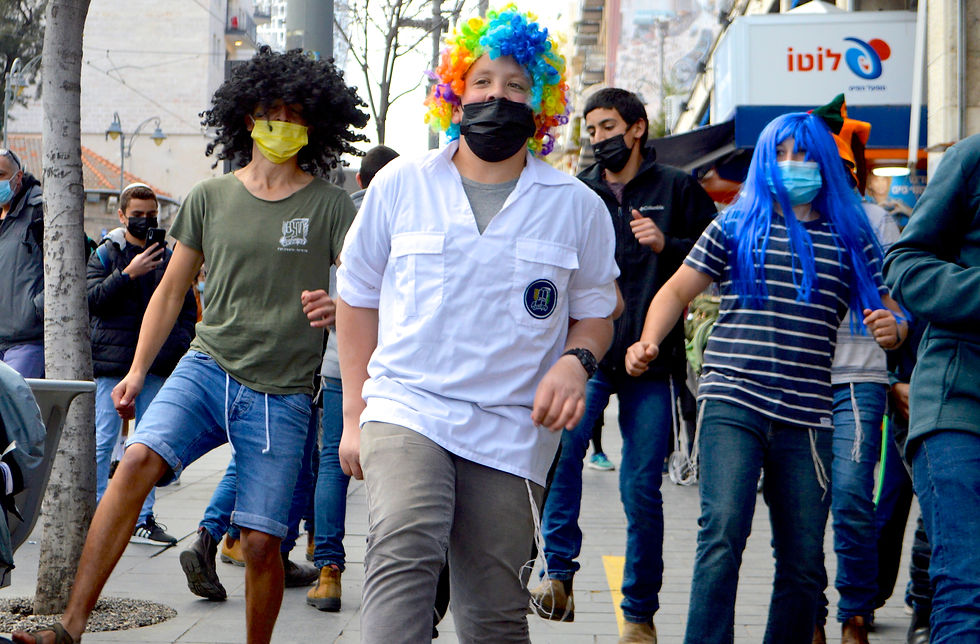
Purim ke no se olvida
Por Shelly Roza Swed
ENGLISH AND SPANISH BELOW
Yo estava prenyada de mi primer ijo kuando mi padre i madre izyeron alia a Israel. Antes ke tenian kaza vinyeron a morar kon mozotros en Yerushalayim.
Mi kaza, vieja ma bastante grande para alikodearlos, era en el sentro, serka del shuk Mahane Yehuda. Mi padre se adapto presto al entorno. Se iva al ulpan kon mi madre para ambezarse un poko de ebreo, ke ya lo saviya desde ke era mansevo. Se iva al shuk para konoser djente i azerse amigos.
Unos kuantos mezes despues ke vinyeron era la fiesta de Purim. Mi marido i yo desidimos de azer una fiesta en muestra kaza, komo lo aziyamos kada anyo.
Vino el torno de topar kostumes. Yo, komo estava prenyada kon tripa grande, dishe de vistirme de relijioza kon una peruka ke topi i un fostan largo, ke ya era bastante. Mi marido tambien se vistyo komo relijiozo kon tsitsit, takya en la kavesa i peotes.
Enderechimos la kaza para ke ayga mas lugar para los musafires, aparejimos el bufe kon todo bueno. Mi madre se vistyo kon rozas en la kavesa i mi padre ande esta se, no esta por en medyo!
Mi madre lo yamo:
—Pepo Pepo, ande estas?
No dyo repuesta i se fue a mirar atras i no dyo repuesta. Se fue a mirar a su kamareta, vido la puerta serrada i lo yamo de muevo.
—Pepo, aki estas?
Oyo la boz de arientro:
—Si, si, no te merikiyes, me esto vistyendo.
—Bueno—disho mi madre i torno al salon.
De birde ya empesaron a vinir los envitados i los ke no eran envitados! Grupos de amigos ke konosiyamos i djente ke no konosiyamos. Era ansina en Yerushalayim: la djente se lo kontavan del uno al otro.
La muzika ya estava alta fina el sielo. Entrando en baylando, ken kon chapeo de kau boy, ken komo bayladera de flamenko, otro komo sultan i otra komo anjelo. Maskas, rizas, beverajes i komidas. Todo estava muy alegre!
Buen karar de tiempo despues vide a mi padre vistido kon su djaketa i su chapeo bere.
—Ande te vas a ir?—le demandi—. Estamos aki todos baylando.
—No, no me esto indo—disho.
—Aki esto.
Bueno, i kontinui a baylar, ma esta va mirandolo todo el tiempo para ver si keria alguna koza. Vide ke esta avlando kon un man seviko ke no konosiya. En supito se suvyeron el manseviko i mi padre enriva del kanape. Mi padre anonso kon su boz otoritoza:
—Sinyores i sinyoras, vamos azer una kompetisyon.
La muzika se estuvo kayada. Todos estavan kuryozos . . . este ombre kon este muchacho.
—Agora al torno, kada uno va kitar una koza de enriva fina la fin, veremos ken va ganar.
El muchacho, riyendose en una manera sportiva, disho.
—Ayde veremos.
I empesaron. Mi padre se kito el chapeyo. El mansevo, su pulover. Mi padre, la djaketa. El mansevo, la bluza. El mansevo ya estava kon medyo puerpo dezmudo. Mi padre se kito el pantalon, ma debasho yevava otrun pantalon. El mansevo se kito el kalsado i mi padre el sigundo pantalon i debasho yevava otrun pantalon. El mansevo dezmazalado no teniya mas kualo kitar: las kalsas, la ora i se kedo kon la kulot. Los musafires, azyendo palmas riyendo i gritando:
—La kulot, la kulot!.
Todos se es tavan pishando de la riza kuando ya la kito, averguensado i riyendo, desmudo komo el diya ke nasyo, delantre de tanta djente. Despues de esta noche nunka mas vimos a este mansevo.
No se imajinava ke le iva akonteser una koza asemejada. Pishin empeso la muzika i los bayles. Akeyas oras entendimos kualo esta va azyendo mi padre kuando se esparesyo: Vistyendose vistidos uno enriva del otro.
Esto fue una fiesta ke todos los partisipantes nunka se olvidaron, mizmo despues de kuarenta anyos.
Mi padre me aviya dicho:
—Lo ize esto para ti, ke estes alegre i ke te riygas siempre.
Malorozamente, despues de kuatro mezes se murio i mos desho esta ermoza memorya. En Ganeden ke este.
————————————————-
*Yalanci dolma en turko.
La otora mora en Yerushalayim
__________________________________________________________________________________
A Purim that won' be forgotten
By Shelly Roza Swed
I was pregnant with my first child when my father and mother immigrated to Israel. Before having their own home, they came to live with us in Jerusalem.
My house, old but large enough to accommodate them, was located in the center of the city, near the Mahane Yehuda market. My father quickly adapted to his new life. He would go to the ulpan* with my mother to study a little Hebrew, which he had learned when he was young. He would also go to the market to meet people and make friends.
A few months after they came, it was the festival of Purim**. My husband and I decided to have a party at our house, as we did every year.
First, we had to find costumes. Since I was pregnant with a big belly, I decided to dress as a religious Jewish woman, with a wig and a long skirt, which was enough for me. My husband dressed as a religious Jewish man, with tzitzit*** hanging out, his head covered with a hat and peyot****.
We moved things around in the house to make more room for the guests, and set up a buffet with all good food. My mother wore roses on her head. My father disappeared and nobody knew where he was!
My mother called him:
—Pepo, Pepo, where are you?
He didn't answer and she went to look for him elsewhere, but still he wouldn't answer. She went to look in his bedroom, saw the door was closed and called him again.
—Pepo, are you there?
She heard the voice inside:
—Yes, don’t worry, I'm getting dressed.
—Very good—my mother said and went back to the living room.
Suddenly, the guests and those who weren't invited started to arrive! Groups of friends we knew and people we didn't know showed up. That's how it was in Jerusalem back then: people told each other about a party and came.
The music was already loud enough. They came in to dance—someone wearing a cowboy hat, a woman dressed as flamenco dancer, another as a sultan, and another as an angel. Masks, laughter, drinks and food. Everything was very lively!
A good while later I saw my father dressed in his jacket and his hat.
—Where are you going?— I asked him—. We're all dancing here.
—No, I'm not leaving—he said—. I'm here.
I continued dancing, but I kept looking at him to see if he wanted anything. I saw him talking to a young man I didn't know. Suddenly, the young man and my father got on the couch. My father announced in his booming voice:
—Ladies and gentlemen, let's have a competition.
The music stopped. Everyone was curious . . . this man with this boy together.
—Let's get down to business, each of us will take something off, starting from the top all the way down to the bottom, and we'll see who wins.
The boy, laughing from ear to ear, said:
—Oh, we'll see.
And they began, My father took off his hat. The young man, his sweater. My father, his jacket. The young man, his shirt. The man was already half-naked. My father took off his pants, but he was wearing another pair of pants. The boy took off his shoes and my father took off the second pair he was wearing under the first pair. The unlucky boy had nothing much left to take off other than the socks, the watch . . . and the panties. The guests, clapping their hands and laughing, shouted:
—Panties! Panties!
Everyone was bursting with laughter when he finally took them off, embarrassed and laughing, as naked as the day he was born, in front of so many people.
He never imagined that something like this would happen to him. After that night we never saw him again.
The music and dancing continued. At that moment we understood what my father was doing when he didn’t answer: He was putting one pair of pants on top of the other.
This was a party that all the participants never forgot, even after forty years.
My father had told me:
—I did this for you, so that you would be happy and always laugh.
Unfortunately, he would die four months later, leaving us with this beautiful memory.
May he rest in peace.
_______________________________
*Intensive school for immigrants to Israel for learning Hebrew.
** Joyous Jewish festival that commemorates the biblical story in the Book of Esther. Dressing up is an important part of the festivity, which is celebrated in the spring.
*** Knotted fringes or tassels attached to the four corners of specific garments in Judaism, worn to fulfill a biblical commandment to serve as a constant reminder of God and His commandment.
**** Uncut sidelocks worn by many males in Judaism.
The author lives in Jerusalem.
Translated by Daniel Santacruz.
________________________________________________________

Un Purim que no se olvidará
Por Shelly Roza Swed
Estaba embarazada de mi primer hijo cuando mis padres emigraron a Israel. Antes de tener su propia casa, vinieron a vivir con nosotros en Jerusalén.
Mi casa, vieja pero lo suficientemente grande para alojarlos, estaba ubicada en el centro de la ciudad, cerca del mercado Mahane Yehuda. Mi padre se adaptó rápidamente a su nueva vida. Iba al ulpán* con mi madre para estudiar un poco de hebreo, idioma que había aprendido de joven. También iba al mercado para conocer gente y hacer amigos.
Unos meses después de su llegada, llegó la festividad de Purim**. Mi esposo y yo decidimos hacer una fiesta en casa, como cada año.
Primero, tuvimos que buscar disfraces. Como estaba embarazada y tenía una barriga grande, decidí vestirme de judía religiosa, con peluca y falda larga, lo cual me bastó. Mi esposo se vistió de judío religioso, con tzitzit*** colgando por fuera, la cabeza cubierta con un sombrero y peyot****.
Reorganizamos la casa para hacer más espacio para los invitados y preparamos un bufé con una gran variedad de comida. Mi madre llevaba rosas en la cabeza. ¡Mi padre desapareció y nadie sabía dónde estaba!
Mi madre lo llamó:
—Pepo, Pepo, ¿dónde estás?
No contestó y ella fue a buscarlo a otra parte, pero seguía sin responder. Fue a su habitación, vio que la puerta estaba cerrada y lo llamó de nuevo.
—Pepo, ¿estás ahí?
Escuchó una voz adentro:
—Sí, no te preocupes, me estoy vistiendo.
—Muy bien —dijo mi madre y regresó a la sala.
De repente, ¡empezaron a llegar los invitados y los que no estaban invitados! Aparecieron amigos conocidos y gente que no conocíamos. Así eran las cosas en Jerusalén por aquel entonces: la gente le avisaban a otros de una fiesta y venían.
La música ya estaba bastante alta. Entraron a bailar: alguien con sombrero de vaquero, una mujer vestida de bailarina de flamenco, otro de sultán y otro de ángel. Máscaras, risas, bebidas y comida. ¡El ambiente era muy animado!
Un buen rato después vi a mi padre vestido con su chaqueta y su sombrero.
—¿Adónde vas? —le pregunté—. Estamos todos bailando aquí.
—No, no me voy —dijo—. Me quedo.
Seguí bailando, pero no dejaba de mirarlo para ver si necesitaba algo. Lo vi hablando con un joven que no conocía. De repente, el joven y mi padre se subieron al sofá. Mi padre anunció con voz potente:
—Señoras y señores, ¡vamos a hacer una competencia!
La música se detuvo. Todos estaban curiosos… ese hombre con ese muchacho juntos.
—Manos a la obra, cada uno se quitará algo, desde arriba hasta abajo y veremos quién gana.
El chico, riendo a carcajadas, dijo:
—Ya veremos.
Y comenzaron: Mi padre se quitó el sombrero. El joven, el suéter. Mi padre, la chaqueta. El joven, la camisa. El muchacho ya estaba medio desnudo. Mi padre se quitó los pantalones, pero tenía más. El muchacho se quitó los zapatos y mi padre se quitó el segundo par de pantalonesnque llevaba debajo. Al pobre muchacho no le quedaba mucho por quitarse, excepto los calcetines, el reloj... y las bragas. Los invitados, aplaudiendo y riendo, gritaron:
—¡Bragas! ¡Bragas!
Todos estallaron en carcajadas cuando finalmente se las quitó, avergonzado y riendo, tan desnudo como el día en que nació, delante de tanta gente.
Jamás imaginó que algo así le sucedería. Después de esa noche no volvimos a verlo.
La música y el baile continuaron. En ese momento comprendimos lo que mi padre hacía cuando no respondía: se estaba poniendo un pantalón encima del otro.
Fue una fiesta que todos los asistentes jamás olvidaron, incluso cuarenta años después.
Mi padre me había dicho:
—Hice esto por ti, para que fueras feliz y siempre rieras.
Lamentablemente, falleció cuatro meses después, dejándonos este hermoso recuerdo.
Que descanse en paz.
_______________________________
*Escuela intensiva para inmigrantes a Israel para aprender hebreo.
**Alegre festival judío que conmemora la historia bíblica del Libro de Ester. Disfrazarse es parte importante de la festividad, que se celebra en primavera.
*** Flecos o borlas anudadas que se colocan en las cuatro esquinas de ciertas prendas que vistan los judíos para cumplir un mandamiento bíblico y servir como recordatorio constante de Dios y sus preceptos.
**** Patillas sin cortar que usan muchos hombres judíos.
______________________________________
La autora reside en Jerusalén.
Traducido Daniel Santacruz.
June 2, 2026
2 de junio de 2026


Comments